
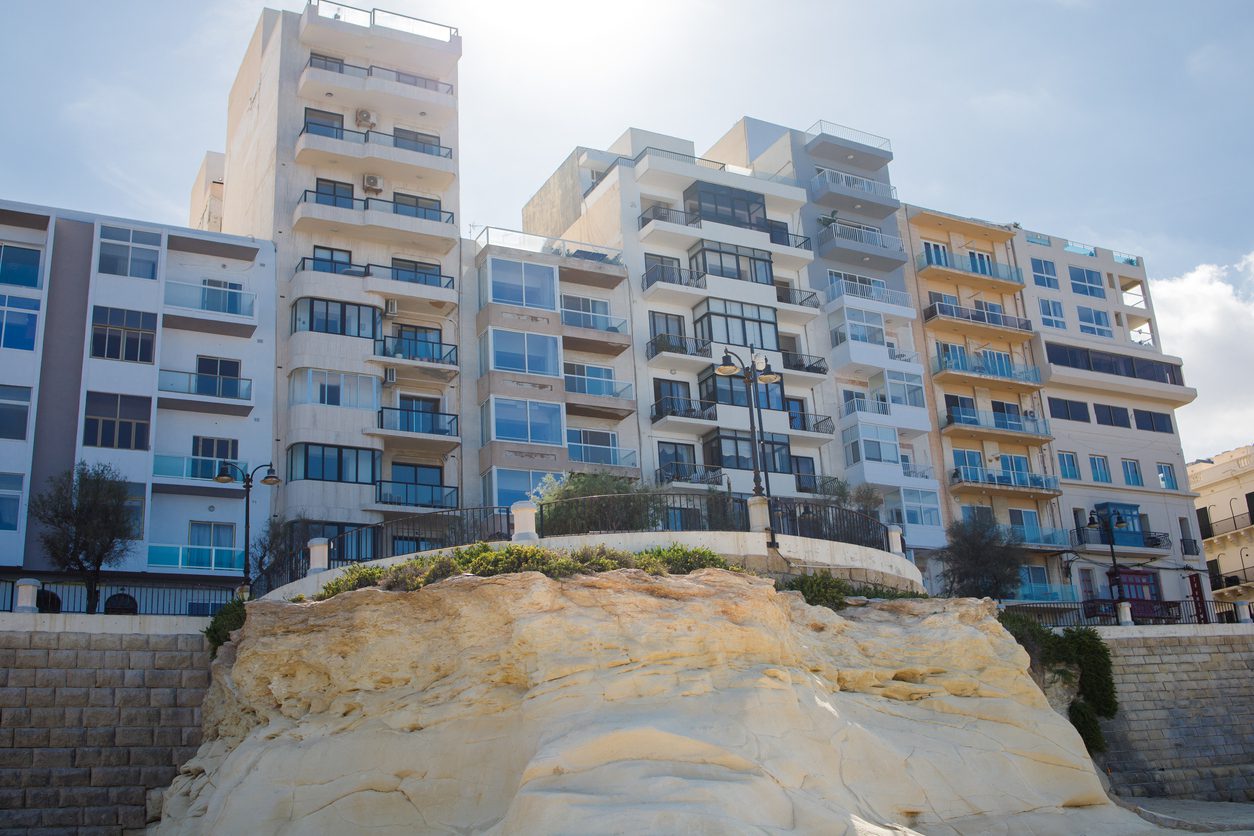
In a recent case decided by Judge Aaron Bugeja, the Civil Court had to determine the right of use of a penthouse roof to install a water tank, a water pump, airconditioning compressor and solar panels.
These matters are normally spelled out in the deed of acquisition but notwithstanding the penthouse owner insisted no use could be made of the roof of his penthouse to install a water tank and pump, an AC compressor and photovoltaic panels.
There was no dispute as to ownership of the penthouse roof. It belonged to the owner of the penthouse. What was at issue was whether the plaintiff had exclusive use of the said roof and so absolute control over what takes place on it, or whether the deed of acquisition placed any limitation on the use of the roof by the owner in the form of servitudes in favour of the underlying apartments.
In its judgement the court observed that the plaintiff’s deed of acquisition explained clearly the division of real rights, which the original vendors—the developers of the block—had drawn up. Once such deed outlines the burdens and restrictions of use. By signing such a deed, the plaintiff was expressly consenting to a restriction of use on his roof. Furthermore, the deed of acquisition was supplemented with a plan, which outlined the manner in which the roof was divided for this use. Therefore, when the original vendor sold the remaining units, he was not creating any new rights but rather allocating to the beneficiary the right of use already specified in the deed of acquisition of the plaintiff.
The court pointed out that the plaintiff had given a very partial reading of the deed of acquisition of his penthouse. The deed expressly stated that the deed incorporates the contract as well as all documents annexed to it. On this basis, the court gave weight to the plan of the roof attached to the deed. The plan outlined which apartment had exclusive use of which area on the roof. The court concluded that acceptance of the plan by the penthouse owner signalled his acceptance that he did not have absolute use of the roof.
The judgement states that there is a difference between the right to property and the right of use of the roof of the same property. The latter in legal jargon is known as the jus utendi, and in this case it was not absolute to the owner of the penthouse. The right of use of the penthouse owner in this case was limited to one area while other areas were allocated to other apartments including to the owner of the penthouse.
The fact that the penthouse or apartment was not yet in a complete state does not mean that the parties could not create, reserve or regulate real rights, easements or restrictions on the basis of plans and conditions integrated into the contracts. Contract law does not prohibit a future property, airspace or shell form from being transferred with clear conditions as to its future use. The court referred to the legal principle pacta sunt servanda, found in Article 992 of the Maltese Civil Code. It means that a contract legally entered into shall have the force of law for the contracting parties, and the parties may only depart from the obligations entered into if there is a revocation by mutual consent, or on grounds allowed by law.
The court rejected the claims by the plaintiff that there were no servitudes burdening the use of the penthouse roof and allowed the defendant—the owner of the underlying apartment—to place a water tank, a water pump, an airconditioning compressor and PV panels on the roof.
The judgement was appealed. Lawyers Paul Radmilli and Cedric Mifsud appeared for the defendant.
This article may also be accessed on MaltaToday.